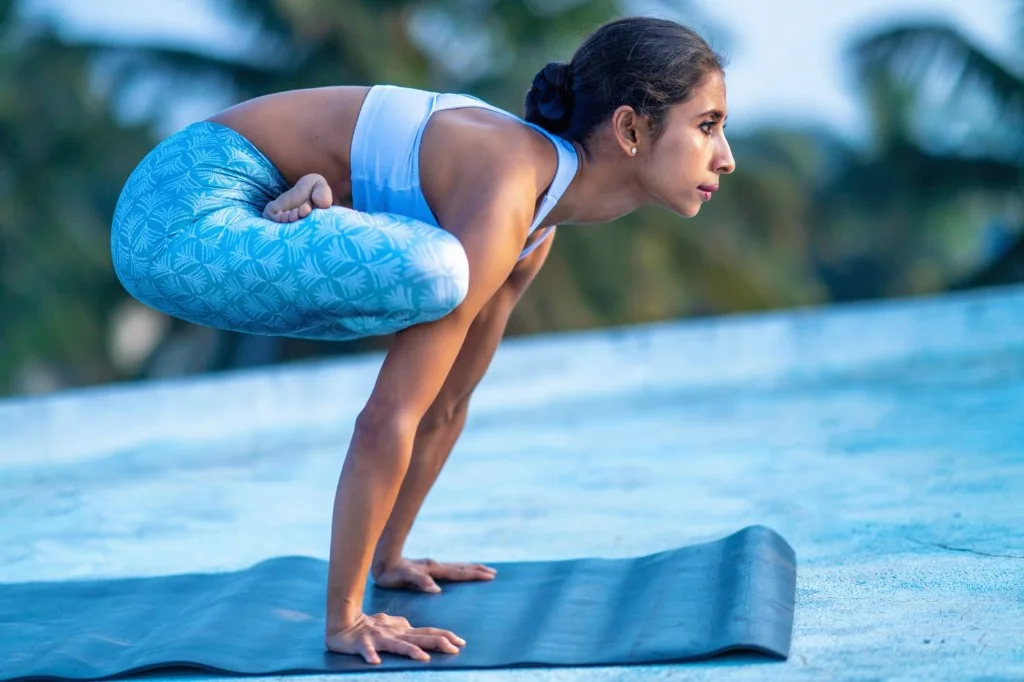
“I am not very flexible, I cannot do yoga…” I hear this often — and to be honest, this is how I started. Flexing on my flexibility (my dad and mom cooked me to be hypermobile, with hyperextension in every joint) in every yoga class.
For the first 10 years of my yoga journey, it was all about splits and how deep I could go in my backbends. Then, in 2010, I started practicing Ashtanga Yoga with my Guruji R. Sharath Jois. The first day my body was shaking, I was out of breath, and my nervous system was fried. Guruji told me — “No strength, go eat chapati.”
Ashtanga Yoga is a system where you work on flexibility and strength of the mind and body — and both coexist and support each other. Without strength, one cannot deepen flexibility; and without flexibility, you cannot explore the full range of your strength. Unlike the belief that you lose flexibility as you grow old, I have been able to go deeper in my flexibility as I grew stronger.
Every series of Ashtanga yoga is practiced under the system of Vinyasa Krama — movement with breath and count. Every movement has a specific count and a breath attached to it. This system is notoriously popular for the chaturangas (the plank jumps — the reason for heavy sweating and steaming bodies).
We start with the primary series, which works on cardiovascular strength and the detoxification of the body. Moving on to the nervous system and the spine and core strength in the second series. The third, fourth, fifth, and sixth series are all about stability, agility, and strength with grace.
All the work on the mat can be seen and experienced in the strength, flexibility, and agility of the mind, body, and emotions.
The body
A detoxified, clean body — with muscular strength and stability, and a spine that is agile and flexible — is a house where the lungs can expand to their maximum capacity, the heart beats strong, and the internal fire (ojas) keeps the immune system, digestion, and nutritional absorption strong.
The mind
The whole process of keeping your focus and memorising the asana sequence keeps the memory strong. Discipline to step on the mat every day builds resilience. Yoga is a mind–body coordination.
The emotions
The process of meeting your fear — lifting your body on your arms while one leg is at a 45-degree angle in the air — and differentiating between failing and falling, to try again, builds emotional strength and stability.
So, asanas, when done correctly, will make you strong (my arms are not the size of my wrist anymore — I got my biceps to lift myself and my students through my practice), will work on your cardiovascular strength and endurance, and of course, will make you flexible.
So you don't have to be flexible to do yoga — but you can become flexible when you practice yoga.
Follow us
Stay connected with our community and get the latest updates on events and celebrations.